Showing posts with label Psalms. Show all posts

Wednesday, January 26, 2022

Psalm 23 - Part 8 - Dwell In the House of the Lord

   Often, I don't sleep very well.  I have a hard time getting to sleep, and I regularly wake up in the middle of the night and then struggle getting back to sleep.  One of the things I've found recently that helps me return to sleep is to meditate on different excerpts from the Bible.  I've been rather fixated on the 23rd Psalm for a while (and my success rate of falling asleep after thinking about it has been pretty good), so I thought I'd do a series of posts on my thoughts on it.  This is part 8 of my 'meditations' on Psalm 23.  

I will dwell in the house of the Lord forever.  What does it mean - to dwell?  

Dwelling (housing - a noun)

Our house is getting close to 25 years old.  In the last couple years we've replaced the roof, the hot-water tank, and the guts of the furnace.  Additionally, our living room window tends to leak when precipitation is blown at it, and all the windows have frost issues in the winter when its cold out.  The pipes to our kitchen sink can freeze if we aren't watching them carefully, too.  We've put a lot of concerned thought into our house in the past couple of years.  Upgrades and window replacement costs aren't trivial.

What a dream - to live in someone else's house rent free and not have to worry about mortgage payments or maintenance!  That's what I imagine its like 'dwelling in the house of the Lord.'  Living care-free, debt-free, responsibility-free.  

Dwelling (thought - a verb)

I can also 'dwell' on a thought.  In doing so, my mind rests on a thinking spot.  And its a thought I keep returning to.  A delightful or passionate meditation.  Its like the 'dip' gravity makes in the plane of space-time around a large object like the sun.  Because of this dip, objects are either drawn to the sun, circle it, or keep returning it from a far distance.
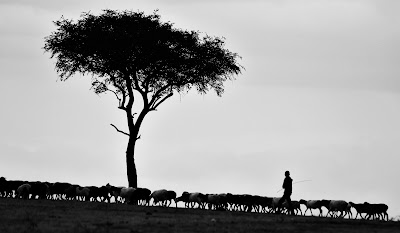
Shepherd Dwellings

I assume shepherds in David's day often slept out in the open with the sheep.  A fire would be going for warmth, but I don't think there would be a comfortable 'dwelling' for the shepherd.  One doesn't get a great rest when you have to keep a fire going all night and lookout for predators or strays.  I imagine a dwelling for a shepherd would be like a day off, or retirement.  A place to return to where everyday worries and concerns can be left behind.  Where one can really rest.

The phrase 'I will dwell in the house of the Lord forever' reminds me of Hebrews 11 where, several times the author speaks of heroes of the faith '...longing for a better country - a heavenly one' and '...looking forward to the city with foundations, whose architect and builder is God.'  I can totally see that shepherd thinking... longing for that better place to lay his head.  And what better place than a dwelling that is designed, built and maintained by God, the Good Shepherd?

Freebie Thought... Identity

In the 23rd Psalm, there really isn’t much spoken about what a sheep does other than normal living... it lies down, it walks, it eats and drinks. It’s a ‘being’ rather than a ‘doing’. Interesting. Oxen pull a plow or a cart. Horses carry people or pull chariots. Sheep... don’t really ‘do’ anything. Today we’re very consumed with who we are, what we’re doing or what we’ve accomplished, and what people think of us. You don’t see any of that in this psalm. It’s all about who God is and what he’s doing for us.

Other posts in this series:

Thursday, December 30, 2021

Psalm 23 - Part 7 - Goodness and Mercy Follow Me

  Often, I don't sleep very well.  I have a hard time getting to sleep, and I regularly wake up in the middle of the night and then have a hard time getting back to sleep.  One of the things I've found recently that helps me get back to sleep is to meditate on different excerpts from the Bible.  I've been rather fixated on the 23rd Psalm for a while (and my success rate of falling asleep after thinking about it has been pretty good), so I thought I'd do a series of posts on my thoughts on it.  This is part 7 of my 'meditations' on Psalm 23.  

Goodness and Mercy Follow Me

One of the 'Dad jokes' in our house goes  "God has three sheepdogs. He's named them: Shirley, Goodness, and Mercy."  I honestly don't remember where I first heard the analogy that Goodness and Mercy are like God's sheepdogs, but it definitely stuck with me.  I love that mental image.

Even trying to sleep last night, though, I found I had 'traded' God's sheepdogs for other hounds called Stress, Worry, and Concern.  They were nipping at my heals for some time before I realized what had happened.  Being self employed and a single income family doesn't make this much easier.

Jesus says we shouldn't worry.  Something I'm finding lately is one of the best ways to combat worry is to be thankful.  More details about my original AHA moment around that on this post.  Its seems its far to easy to end up like the seeds in Jesus' Parable of the Sower which landed on the good ground but were choked by the thorns of 'worries, cares, and concerns of this world.'  

As an adult, I get glimpses every once in a while of what its be like to live without worries, cares, and concern.  Makes me want to be a kid again.  Carefree. 

Being Followed

Goodness and Mercy follow me.  That sounds like it should be a rather passive experience.  Given the context in this Psalm, if I follow the Good Shepherd's path of righteousness I shouldn't have to try and conjure up goodness or mercy in my life - they should just happen.  I'm curious though... does that mean I experience God's goodness and mercy in my life, or God's goodness and mercy overflow out of my life to others?  While its not clear, I'd like to think both.  As I experience God's goodness and mercy for myself, I can't help but share with others.

Other posts in this series:

Sunday, November 21, 2021

Psalm 23 - Part 6 - Anointed Head, Overflowing Cup

 Often, I don't sleep very well.  I have a hard time getting to sleep, and I regularly wake up in the middle of the night and then have a hard time getting back to sleep.  One of the things I've found recently that helps me get back to sleep is to meditate on different excerpts from the Bible.  I've been rather fixated on the 23rd Psalm for a while (and my success rate of falling asleep after thinking about it has been pretty good), so I thought I'd do a series of posts on my thoughts on it.  This is part 6 of my 'meditations' on Psalm 23.  

You Anoint My Head with Oil....

I'm not a shepherd, and I never have been.  While I've heard that oil can be helpful on a sheep's head, I don't claim to know that for a fact, so I won't get into that here as it doesn't mean much to me personally.   This phrase does speak to me about a couple of things: resources I need, but that are beyond my ability to control, and the value of 'anointing' to David.

Even in this day and age, both oil and water are valuable resources.  What kind of oil was this - vegetable oil or some petroleum based oil?  Where ever it came from, it was likely purchased by the shepherd.  Since the shepherd anoints my head with it, that means I must also have an intrinsic value to him.  A comforting thought, even if I don't entirely understand the practical use for oiling a sheep's head.

Being 'anointed' had a symbolic and powerful meaning to David.  He was actually anointed to be king and lead God's people (in ceremony) three separate times.  His first anointing was performed by the prophet Samuel.   King Saul was also anointed by Samuel and because of that David wouldn't touch him.  Multiple times Saul tried to hunt David down and kill him, and David wouldn't touch Saul because 'he is God's anointed one.'  I recently re-read the story of David's life in the bible and one of the things that struck me was how adamant (frustratingly stubborn) David was in this conviction of not touching Saul, 'God's anointed one'.  At least, if I was in David's group of men, that's how I would have felt about it.  Clearly though, David believed that God's anointing carried with it a strong connotation of God's authority and protection.  

My Cup Overflows

I've been recently intrigued by imagery in the Bible of overflowing springs, wells, and cups.  The Garden of Eden was watered by a river that split into 4 rivers and watered things.  Where did that river come from - the ground perhaps?  Twice God provided water for the Israelites in the wilderness by means of a spring of water from a rock.  The city of Jerusalem was built around the Gihon Spring (Gihon means gushing), and once David became king he made Jerusalem the capital.  In John 4:13-14, Jesus talks to the Samaritan woman at the well and says, "Everyone who drinks this water will be thirsty again, but whoever drinks the water I give them will never thirst. Indeed, the water I give them will become in them a spring of water welling up to eternal life."  And finally the book of Revelation, the last book of the Bible, chapter 22 talks about Eden being restored and a river flowing from the thrown of God.

An abundance of water - overflowing spring of life

Considering the value of a resource like water in a place like the Middle East, particularly for animals like sheep, the symbolism of an overflowing cup is extraordinary.   A valuable resource in abundance, provided for me!  Not just for drinking, but washing, and swimming.  Perhaps this also gives me an indication of what the table that God prepares for me looks like?

Oil and water don't mix...

I've made the assumption (hopefully a safe one) in this meditation that the 'overflowing cup' in this Psalm is overflowing with water.  If that is true, one could say that these two valuable resources are drawn from opposite sides of a spectrum, because oil and water don't mix.  Yet, the Holy Spirit in the Bible is represented at different times as water and/or oil.  I haven't really delved into the significance of all that, but thought it was interesting.

Other posts in this series:

Saturday, October 23, 2021

Psalm 23 - Part 5 - A Table in the Presence of My Enemies

 Often, I don't sleep very well.  I have a hard time getting to sleep, and I regularly wake up in the middle of the night and then have a hard time getting back to sleep.  One of the things I've found recently that helps me get back to sleep is to meditate on different excerpts from the Bible.  I've been rather fixated on the 23rd Psalm for a while (and my success rate of falling asleep after thinking about it has been pretty good), so I thought I'd do a series of posts on my thoughts on it.  This is part 5 of my 'meditations' on Psalm 23.  

You Prepare a Table for me....

Have you ever tried to eat when you were anxious?  Until I was married I didn't really draw an association between how I felt when I was eating and indigestion I felt afterwards.  However both my wife and my daughter have more sensitive stomachs than I, and it is definitely 'a thing' with them.  They both need to be emotionally relaxed when they eat and have 30 minutes or so of downtime after they eat.  If that doesn't happen, the meal doesn't sit well - at all.  I was honestly skeptical of this when I first married my wife, but after living with her for almost 30 years I've had enough proof to convince me that some people need to eat in a calm, relaxed environment.

Food and table preparation in Biblical times was generally the work of a subservient person.  Here's is a picture of God, the Good Shepherd, as our servant king.  He prepares a table and a meal for us!  What does the table God prepares for me look like, I wonder?

What does God's prepared table look like?

...In the Presences of My Enemies

Who is my enemy?  My original perspective was that the 'enemy' in this verse was the 'enemy of our souls' and his minions.  John 10:10  1 Peter 5:8  With that perspective, this phrase just feels like a bit of an 'in your face, devil' statement to me.  God can not only protect me, but prepare a table for me - which is much more than just feed me.  I don't have to eat on the run - its not a take-out dinner.  I can sit down to a real meal.  

Some interesting examples of 'eating in the presence of my enemies' from the Bible:

  • David ate at Saul's table.  Saul wasn't exactly best friends with David.  On multiple occasions Saul tried to kill David.  One could definitely consider Saul as one of David's enemies.  
  • David living (and eating) among the Philistines in Ziklag for over a year, running from Saul.  They were definitely enemies of Israel at the time - one of the reasons David thought it would be safe to hide from Saul there.
  • Even the Last Supper with Jesus and his disciples in Jerusalem could be looked at this way.  Judas was at that table, and Jerusalem was full of Jesus' enemies.

When I consider all of these situations, it reminds me of the words to Surrounded - a song we play at church sometimes:  It might look like I'm surrounded, but I'm surrounded by You.  2 Kings 6:15-16

David just finished reminding himself that God is present, even in the valley of shadow of death.  And here we find his enemies 'present' as well.  I should not be surprised when I face trouble.

Asking myself again...  Who is my enemy?  Everyone probably has a different answer to this question - something I didn't actually consider until I discussed this passage with my wife.  What if I have a personal enemy, at school or at work?  What if there is someone in my life that I have a vehement disagreement with?  God tells me to love my enemies...  Does that mean I should be sharing my place at this table God is preparing for me with them?  Jesus seems to strongly suggest this!  

Pronouns in Psalm 23

I find it interesting that halfway through this Psalm, the pronoun used for referring to God as a Shepherd changes from 'He' to 'You'.  As soon David starts referring to death, fear, and enemies, David's relationship to the Shepherd seems to change.  I find it comforting to know that:

  • God wants me to know that He's closer, more available to me when I find myself in dire straights
  • David wanted God to be closer to him when he was in life-threatening situations (as would I)

Tuesday, September 28, 2021

Psalm 23 - Part 4 - The Valley of the Shadow of Death

Often, I don't sleep very well.  I have a hard time getting to sleep, and I regularly wake up in the middle of the night and then have a hard time getting back to sleep.  One of the things I've found recently that helps me get back to sleep is to meditate on different excerpts from the Bible.  I've been rather fixated on the 23rd Psalm for a while (and my success rate of falling asleep after thinking about it has been pretty good), so I thought I'd do a series of posts on my thoughts on it.  This is part 4 of my 'meditations' on Psalm 23.  

Though I Walk Through the Valley...

...of the shadow of death, I will fear no evil.  The previous verse says that my Shepherd leads me on paths of righteousness, and that God's reputation (His namesake) is involved in me staying on those paths.  What if His path leads unpleasant places?  Actually, its not really an 'if'.  David didn't say 'If I walk through the valley...' or 'Though I might walk through the valley...'  Jesus said 'In this world you will have tribulation...'   I shouldn't be shocked when bad things happen.  

We face all kinds of 'death' in our lives.  A literal, physical death of a life is the immediate picture that this verse has conjured up for me.  However, recently I've realized that I face many other more common metaphorical 'deaths' that have a significant impact on my life:  Death of a dream or hope, death of a job or career, death of a relationship, etc.

Even though being on God's path isn't a guarantee of an easy, happy-go-lucky life, David says 'I will fear no evil.'  Jesus similarly responds, 'Be of good cheer, I've overcome the world.'  

Similarly, while I'm heading this direction, its in a walk.  I'm not cowering, sneaking, hesitating, or running (all things I might be doing if I was afraid).  To me, walking in this context alludes to being secure and relaxed.  Further to this thought....

Your Rod and Staff..

I wondered for a long time why David would say 'Your rod and staff comfort me.'  A rod doesn't seem like a formidable tool or weapon to me, unless its in the hand of a karate master.  I couldn't see a shepherd using a rod quite like that.

Some time passed, and I was considering how David would have meditated on the Bible.  Psalm 119 gives a detailed picture of how David did this.  Likely he found a lot of parallels to himself as almost all the patriarchs in the book of Genesis were shepherds of some sort.  In Exodus, Moses was a shepherd for 40 years.  He also had a shepherd's staff - one that God continually used to do some pretty amazing things.  Then in the book of Judges, we see God appear in front of Gideon with a staff.  And that staff seems to have special qualities too - throws fire, etc.

I'm sure David made some kind of connection with God's staff and the power of God.  And therein lies, at least in part, the answer to my question of how David could find comfort in God's rod and staff.

...Comfort Me

Finding comfort in an unsafe place.  

a safe, comforting hand to hold
We have a large outlet mall near our house.  It is a 2 kilometre walk around the inside circumference of the building.  Some time ago, I was there with my kids on a busy weekend and noticed a young boy about 5 years old who was clearly lost.  He was calling for his mommy and daddy and not getting an answer.  You could hear the emotion start to well up in his voice as his calls became louder and more concerned.  I was about to turn and help him when a uniformed security guard showed up.  He spoke quietly to the boy and offered the boy his hand.  The young fellow immediately calmed down and put his hand in the guard's and they walked off together to the mall's office to find the boy's parents.  This scene really moved me.  It spoke to me of being afraid, but then finding comfort in an authority figure who was bigger than me, protective, in control, and knew where to go and what to do.  Similar to the Good Shepherd.

Even now as a grown up, I often find I need someone in my life I can lean on who is bigger than me, knows all my foibles and concerns, and has everything control even when I don't feel like it.  If I can remember that and centre myself on that thought and in His presence, I find the comfort and protection I need.

Other posts in this series:


Sunday, April 11, 2021

Psalm 23 - Part 3 - Restoration and Righteousness

  Often, I don't sleep very well.  I have a hard time getting to sleep, and I regularly wake up in the middle of the night and then have a hard time getting back to sleep.  One of the things I've found recently that helps me get back to sleep is to meditate on different excerpts from the Bible.  I've been rather fixated on the 23rd Psalm for a while (and my success rate of falling asleep after thinking about it has been pretty good), so I thought I'd do a series of posts on my thoughts on it.  This is part 3 of my 'meditations' on Psalm 23.  

He Restores My Soul

'Restore' is an interesting word.  In my mind, the scenario it conjures up is:  a store of something, in this case, whatever a soul stores has been depleted, exhausted, and it gets built back up again.  Re-stored.  Exhausted is another good word.  When I'm tired, no just physically, but combined with all the other ways one can be tired, my outlook on life gets very negative.  I feel depleted, used up, spent, baked, 'done'!  

But God says 'the joy of the Lord is my strength'.  He rejoices over me with singing.  And He restores my soul.  It doesn't often happen in a snap.  Actually, a good sleep is what I need a lot of the time.  There is a lot of truth in the statement 'His mercies are new every morning.'  I can then face another day with a renewed attitude, perspective, and vigour - physically, emotionally, and spiritually.  

Update Dec 18, 2023
I recently realized that the restoring mentioned here could also be required because something was lost or taken from you.  The Bible says that the devil comes to '...steal, kill, and destroy...'  

I recently had a situation where I felt like my peace, faith, and trust in a relationship was stolen because of something hurtful that was said directly to me.  As I took time to ponder how this happened and what I could've done differently, I was led to the story of David and Goliath.  When David came to the battlefield to deliver his brothers some food from home, he started asking questions about Goliath.  His oldest brother heard what he was doing and said some pretty mean things, that likely weren't true:
"Why have you come down here? And with whom did you leave those few sheep in the wilderness? 
I know how conceited you are and how wicked your heart is; 
you came down only to watch the battle."
1 Samuel 17:28

I don't know what kind of relationship David had with his older brother.  This didn't seem to phase him too much, so perhaps this had happened a lot in the past?  Certainly the first few times this would've hurt.  David would need to be restored on the inside to get past this.  I mean, generally a younger brother looks up to his older brother, but it seems the respect and love in this sibling relationship has been lost/stolen.

I'm sure there's a deeper meaning to David's phrase '...You restore my soul..' than 'Whew, God - I'm tired.'  I'll know I'll read/think about this differently from now on.

He Leads Me in Paths of Righteousness...

...For His namesake.  Isn't it interesting that God ties his reputation to my direction?  The name of God is one of the massive underlying themes of the Bible - its who He is.  The Israelites had all kinds of names for God to remind themselves of who He is.  A person's name in Biblical times was tied to who they were.  God even changed some people's names to give them a new identity (and a new path?) in life:  Abram to Abraham, Sarai to Sarah, Jacob to Israel.  I get a lot of comfort knowing that my direction in life is ultimately guided by God.  If I start to stray, He'll make sure I get back on His path for me.  

When I was younger I used to fret about finding God's will and direction for my life.  I'd get to a point where I'd almost have analysis paralysis trying to discern what God's 'path' for me was.  Now I feel much more secure as I 'commit my way to the Lord..' because '...He will direct my path.'  Prov. 16:3.  Even if I live up to my human nature and get inadvertently distracted or turned around, I can rest assured that God is still in control. Proverbs also says 'Many are the plans of a person's heart, but its the Lord's purpose that prevails.'  God has put His name and reputation on the line as a guarantee.

Another interesting point of note: In the Lord's prayer, Jesus told the disciples to pray '..lead us not into temptation...'  I don't think temptation is a place, but more of a perspective/mind-set.  God intentionally leads us beside still waters, or into valleys of death, and I'm sure a bunch of other curious places.  Because we're human, any of these places has the potential for temptation if we decide to stray away from Him.  Its not difficult to get lazy and complacent beside still waters.  Its easy to fall into despair and depression in valley's of death.  Perhaps Jesus was saying, 'Be aware! Be alert!  The enemy is about, prowling for distracted, sheep whom he can devour.'

He leads me in paths of righteousness

November 18, 2023 Update:
I've been thinking more about the concept of 'paths' in association with sheep.  In particular there are several video clips online of a sheep rescued from a ditch that, because there is not dog, or path, or herd to guide it, immediately runs directly back into the ditch.  Paths are important.  They can protect us from hazards like ditches and brambles that we can get caught in (sheep's wool getting stuck in brambles is like velcro).  They show us the way, and not just any 'way', but clearly a way many have gone before.  There is a history there, and that history is important.  The author of the book of Hebrews makes a similar association after finishing their summary of the 'heroes of faith' in Hebrews 11.  The next chapter begins with:

"Therefore, since we are surrounded by such a great cloud of witnesses, let us throw off everything that hinders and the sin that so easily entangles. And let us run with perseverance the race marked out for us,  fixing our eyes on Jesus, the pioneer and perfecter of faith.."
and continuing a bit further down with a reference to Proverbs 4:26:
"So give careful thought to the paths for your feet and be steadfast in all your ways."

Other posts in this series:

Saturday, February 6, 2021

Psalm 23 - Part 2: Green Pastures and Still Waters

 Often, I don't sleep very well.  I have a hard time getting to sleep, and I often wake up in the middle of the night and then have a hard time getting back to sleep.  One of the things I've found recently that helps me get back to sleep is to meditate on different excerpts from the Bible.  I've been rather fixated on the 23rd Psalm for a while (and my success rate of falling asleep after thinking about it has been pretty good), so I thought I'd do a series of posts on my thoughts on it.  This is part 2 of my 'meditations' on Psalm 23.  

He makes me lie down in green pastures.

My initial thoughts around this section of the Psalm centre around rest and food.  Its interesting that the very first thing David highlights in this Psalm that the Shepherd does for his sheep is related to rest.  A good thing to consider while I'm trying to go to sleep.  Stress and rest don't really go together.  A sheep can't get run away from predators fast from a lying down position, so there's an element of trusting the shepherd in the act of lying down.

I think we're a little spoiled with mattresses in our modern lives.  Shepherds and sheep had no such luxury.  A soft, comfortable place to lie down could have been hard to find in the middle east, unless you found a good sized, green piece of turf.

He's not making me lie down just anywhere.  Green pastures would be soft and cool.  They're also full of the best food (from a sheep's perspective) so I'm not concerned about what I'm going to be eating because its all around me.  God takes the stress out of my life, if I trust him.

He leads me beside still waters

Whenever I consider this phrase I have a picture in my mind of a creek/brook a foot or two below the level of the green pastures, with a smooth, waveless current.  The water is crystal clear and trees are scattered around the bank.  Something like this picture, except the banks aren't quite that tall:


The Good Shepherd leads me here!  I am:
  • refreshed - the water is cool and flowing over me, 
  • cleaned - the water current gently washes the dirt off of me, and 
  • my thirst is quenched.  

What I can't connect

So here's the disconnect in my head...  These green pastures and still waters, where did David find them in Israel?  When I go to Google Maps and look at satellite and street views of different places there around Bethlehem where David grew up, I can't find green pastures and still waters.  Not easily anyway.  Was David wistfully imagining this place in his mind, or was the pedosphere (skin of the earth) in Israel different back then?  I don't have an answer to that question, but its definitely something I think about.  

A river in a desert is almost a contradiction of terms.  Water is precious and in most places in the bible people had to dig wells to get to it.  Then they had to haul it home for cooking, washing, cleaning, etc.  It was a significant chore back then, yet we don't consider much these days in developed countries because of our access to water.  We can turn on a tap and there it is.  For a shepherd in David's time and place, having access to a clear, still steam of water would be tantamount to gold.

These questions aside, I take much comfort though thinking of the Good Shepherd making me lie down in green pastures and leading me by still waters.

Saturday, November 28, 2020

Psalm 23 - Part 1: The Lord is My Shepherd

 Often, I don't sleep very well.  I have a hard time getting to sleep, and I often wake up in the middle of the night and then have a hard time getting back to sleep.  One of the things I've found recently that helps me get back to sleep is to meditate on different excerpts from the Bible.  I've been rather fixated on the 23rd Psalm for a while (and my success rate of falling asleep after thinking about it has been pretty good), so I thought I'd do a series of posts on my thoughts on it.  I hope you find them interesting.

'The Lord is my Shepherd...'

I wonder... 'was it a big deal for David to think of God as his shepherd?'  His family, his tribe, and his nation at the time wouldn't even spell the vowels of God's name out of reverence.  Was David perhaps pushing some boundaries with the analogy of his God, his family's God, his tribe's God, his nation's God as a shepherd?  I don't think shepherds were considered the pinnacle of Israeli career development at the time.  I can hear people saying now: 'How can a shepherd be considered wise or intellectual?  They hang out with sheep all day!'  So I'm curious if someone in David's time heard this song (or psalm), and thought: 'Wow, David's going to get some pushback from the religious establishment on this metaphor.'

Shepherd with Sheep - Photo by Biegun Wschodni on Unsplash
Shepherd with Sheep - Photo by Biegun Wschodni on Unsplash

But God meets us where we are at, and David understood this.  So David didn't have a problem visualizing God as his shepherd.  As a shepherd himself, this is what David could relate to.  He must have cared for his sheep to have written a psalm like this, likely based off of his experience as a shepherd.  

Jesus didn't have a problem with identifying himself as a shepherd either.  Interesting that He never said 'I am the good carpenter, or the good fisherman.'  He intentionally proclaimed: 'I am the good shepherd, and my sheep know my voice...'  He isn't a shepherd that just shows up for work and does his job - a mercenary, contractor, or hired hand.  He is a good shepherd, ready to lay His life down for his sheep. He is intimately aware of the foibles and idiosyncrasies of the sheep in his flock, and ready to guide them, give them what they need.  

Update Dec, 30, 2023
A shepherd is responsible for his sheep - for their safety, their well-being, ensuring they get the sustenance and shelter they need, etc.  To me this first phrase implies that when I put my trust in God, He in turn, makes himself responsible for me.  And could you find a more responsible entity in the universe?  

'... I shall not want.'

Its interesting how this phrase is part of the opening sentence of Psalm 23...  'The Lord is my Shepherd (consequently) I shall not want.'  In my mind (you can disagree if you like), this provides a context for the rest of the statements made in the Psalm 23.  Since God is my Shepherd, here are the things I don't have to concern myself with anymore.... and David goes on to list them.

I like to read The Message version of the Bible.  It gives a modern twist/taint on what is written there that I appreciate, and sometimes provides me with a perspective I hadn't considered before.  For example, I was reading 'the love chapter' in 1 Corinthians 13 one day, and the middle phrase of verse 4 popped out at me:  '...love doesn't want what it doesn't have...'  I think the original translation is 'love is not jealous', but I thought this was an interesting take on jealousy, lust, and necessity.  The way I read it is more like '...love doesn't care about or isn't concerned with what it doesn't have....'  It provided me with a new lens to read Psalm 23 with.  God is my shepherd and God is love.  As a child of God, I should be full of love, too.  1 John 4:7,8.  And if I'm full of love, I shouldn't be wanting, lusting after, or concerning myself with things I don't have or don't need.  Rather, I should be satisfied and content.  

Great musings, but for me to live like that is, well, let's just say I'm not there yet. 

Other posts in this series:

Thursday, February 8, 2018

Thoughts on David

In early February 2011 or 2012, I was drawn to read about David, and his life and times in the Bible.  I'm trying to remember why, but I can't right now, so it mustn't be that important.

What has been sticking in my head as I was reading psalms that he wrote, and different things that happened to him is:

What made him different?

Shepherd and sheep in a green pasture
How did he get to know God the way that he did?  What influenced him as a shepherd boy to stand up to Goliath the way that he did?  Remember, he didn't have the whole Bible to read like we did.  I wonder if he even had access to a Book of the Law to refer to when he came home from looking after the sheep.

Where did he get the inspiration to write some of the psalms the way that he did?  If I were to write about my relationship with God, what would it read like?

What kind of person goes after a lion or a bear and takes away its food?  Living close to the mountains here in Calgary, we are often told to stay as far away as possible from a bear with fresh kill.  David doesn't use his slingshot.  He 'seizes' the animal by its 'beard' and strikes it and kills it.

Where did David get the idea that God isn't  interested in sacrifices as much as He is interested in broken and contrite hearts?

What did David see in God's word (what there was of it then) that made him pen the longest psalm in the Bible about it?  Is there something he saw in Deuteronomy, Numbers, and Leviticus that I haven't seen?

The Whole Earth is Full

Feeling Full As I've gotten older, I've noticed two things about 'feeling full' when I'm eating:  It seems I can't e...